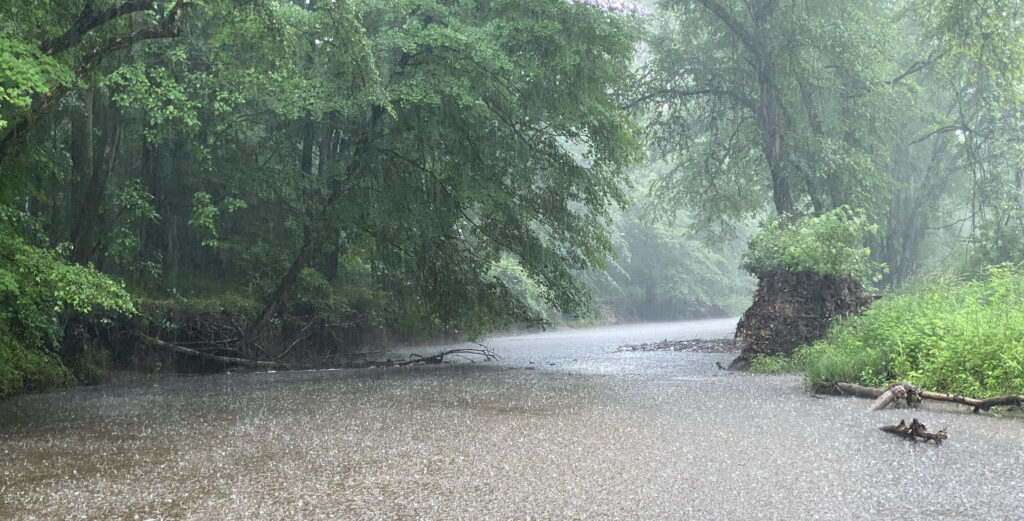

On the evening of Sept. 1, 2021, Mike Chipowsky, then a member of the Union Fire Company, knew things were going to get bad. “The rain was unrelenting,” he said.
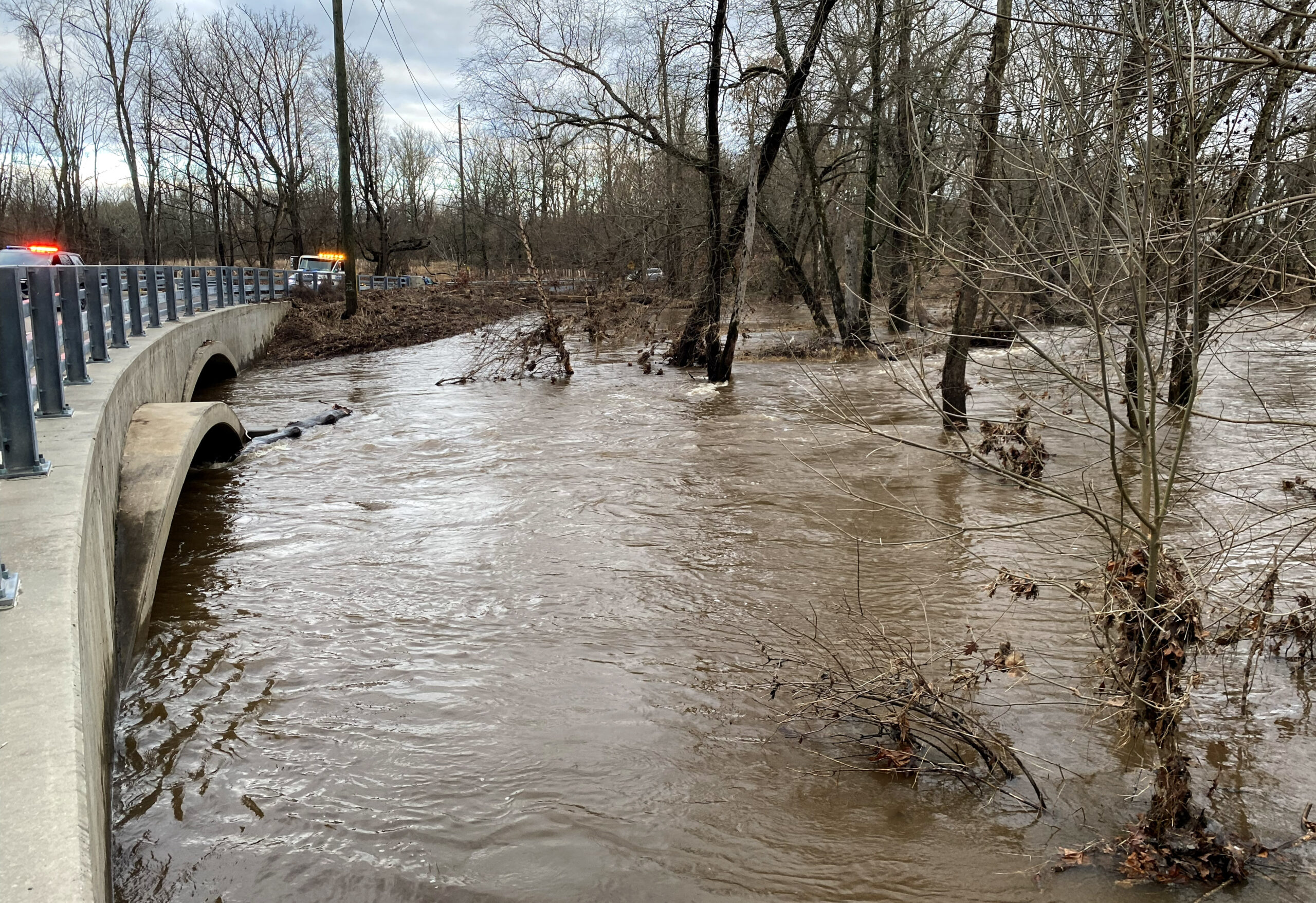
The remnants of Tropical Storm Ida had arrived. As torrential rains swept through Hopewell Valley, two people lost their lives and more than 50 had to be rescued from vehicles. Across New Jersey, 30 people died.
A record 9.13 inches of rain fell in Hopewell Valley, turning tributaries into torrents that surged into the Stony Brook and other waterways. The resulting flash flooding covered roads and damaged bridges throughout the region.
“Streams rose so fast,” Chipowsky recalled. “It was something we haven’t seen in my lifetime.”
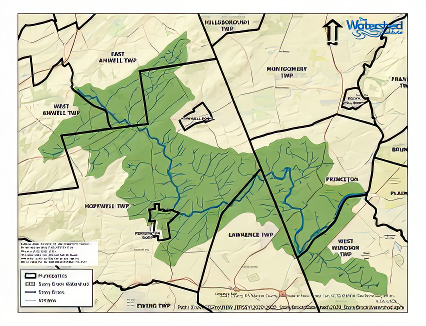
As floodwaters receded and towns began recovering from the damage, the need to prevent future flooding became clear. In response, The Watershed Institute convened leaders from municipalities in the Stony Brook watershed—Hopewell Township, Lawrence Township, Princeton, and Pennington Borough—to explore regional stormwater management solutions.
“It was this recovery that started the process of bringing the Stony Brook towns together to talk about ways to remediate flooding in the future,” said Mike Pisauro, policy director at the Watershed.
New Rules Spur Regional Action
Shortly after, the New Jersey Department of Environmental Protection (NJDEP) issued updated regulations for MS4 stormwater permits, requiring municipalities to improve infrastructure to address more frequent and intense storms driven by climate change. A key requirement was the creation of watershed-based improvement plans focused on water quality and flood reduction.

This set the stage for further collaboration among the four municipalities. “With the leadership and commitment of Hopewell, Lawrence, Pennington, and Princeton, we are setting a new standard for watershed protection in New Jersey,” said Jim Waltman, executive director of the Watershed.
Understanding how stormwater moves across the 55-square-mile watershed is no small task. Runoff flows through a network of gutters, basins, and ditches into small streams that eventually feed into the Stony Brook—carrying with it pollutants such as oil, fertilizers, pesticides and pet waste that can damage habitats, harm aquatic life and contaminate drinking water sources.
Each town has completed an inventory of its runoff sources. Together, they are now funding One Water Consulting to conduct water sampling and develop a comprehensive watershed plan to improve water quality, reduce flooding, and enhance the ecological health of the Stony Brook.
“One Water Consulting is thrilled to be working with Hopewell, Princeton, Lawrence, and Pennington on this Regional Watershed Management Plan,” said James Cosgrove, president of One Water Consulting. “By doing this work on the regional level, the cost is lower, and the benefit is greater.”
A First-of-Its-Kind Collaboration
By pooling resources and expertise, the municipalities are building a replicable model for environmental cooperation. The plan is intended not only to meet NJDEP requirements, but to exceed them, restoring floodplains and buffers and achieving greater outcomes than any town might accomplish alone.
“This is the first multi-community collaboration of its kind in the state,” Waltman said.
The Stony Brook begins in the Amwell Valley in Hunterdon County and flows through the four partner municipalities in Mercer County. Portions of each town drain into the brook, contributing to runoff and flood risk. The Watershed has facilitated meetings since 2022 and continues to guide planning efforts.
“Planning for water quality improvements at the scale of the watershed is a complete no-brainer,” said Princeton Councilman David Cohen. “Imagine trying to get fit only by exercising your left arm—it just can’t be done.”
Hopewell Township Mayor Courtney Peters-Manning echoed the benefits of a collective approach. “We appreciate the Watershed bringing the towns of the Stony Brook region together to address stormwater challenges collectively. When we work together and approach a problem holistically, we achieve a better result,” she said.
Pennington Mayor Jim Davy said the project not only makes regulatory compliance more efficient but also lays the groundwork for long-term sustainability. “We believe this collaborative approach will serve as a model for other regions throughout New Jersey facing similar watershed management challenges.”
Lawrence Township Mayor Patricia Hendricks Farmer said her town was proud to be the first to support the effort. “Its core mission aligns with our community’s values to promote and protect our natural resources in meaningful ways,” she said.
The plan is expected to be completed by the end of 2026 and will include opportunities for public review and comment.