

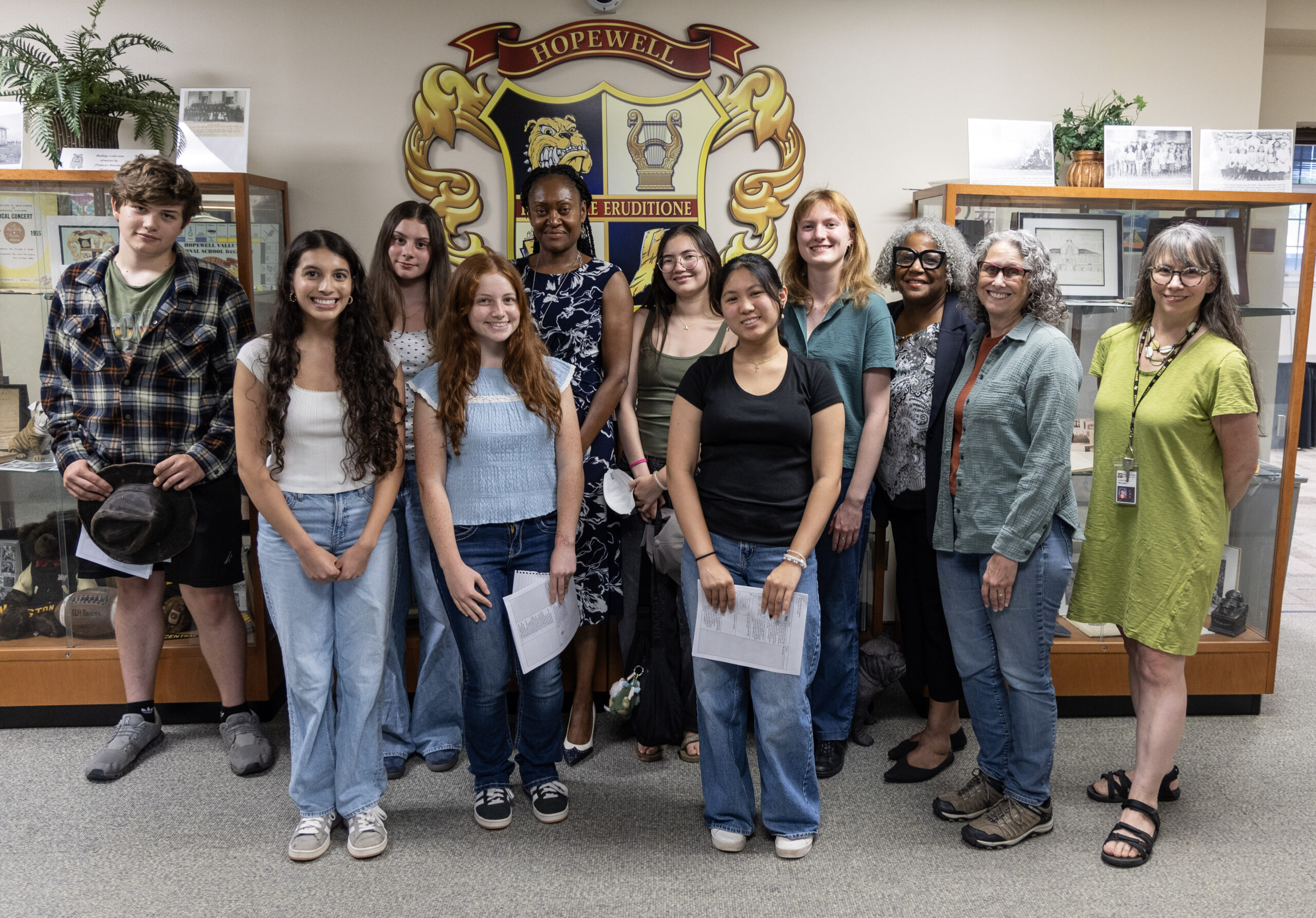
Four years after Hopewell Valley students and teachers successfully urged the district to adopt a Climate Action Plan, students, educators and community partners returned to the Board of Education this month to report on progress — and outline what they hope comes next.
Members of the district’s Climate Action Committee presented an update during the June 15 Board of Education meeting, highlighting expanded climate curriculum, new partnerships, student-led research projects, stormwater resilience efforts and more than $90,000 in outside funding secured since the initiative began.
“This is really exciting,” said Carolyn McGrath, co-chair of the Climate Action Committee and advisor to Hopewell Valley Central High School’s Youth Environmental Society. “We have two students here this evening who are alumni, who graduated from Hopewell and who wrote the original proposal four years ago.”
The Climate Action Plan, adopted by the Board of Education in 2022 after student advocacy, focuses on four major areas: education, transportation, food and waste, and resilience and facilities. Since then, students, teachers, administrators, and community volunteers have worked together to advance goals in each area.
Climate Education Reaches More Students
Committee members reported continued growth in climate literacy efforts throughout the district.
Through a Climate Literacy for Community Resilience grant from the New Jersey Department of Education, teachers developed lessons spanning grades three through 12 and multiple subject areas. Students studied topics ranging from green infrastructure and stormwater management to environmental justice, pollinator habitats and native plants.
Additional funding from the Hopewell Valley Education Foundation supported hands-on learning opportunities through The Watershed Institute. Third-grade students participated in environmental lessons at their schools, while middle school and high school students visited the Watershed to learn firsthand about green infrastructure and climate resilience.
The committee also highlighted ongoing professional development opportunities for teachers and partnerships with organizations focused on climate education.
Students Gather Data on Transportation and Waste
Students have also taken a lead role in researching the district’s environmental footprint.
As part of the transportation component of the Climate Action Plan, students conducted surveys, gathered traffic data and analyzed vehicle emissions associated with daily school drop-offs. Drone footage and on-the-ground observations helped document traffic patterns at Timberlane Middle School and Hopewell Valley Central High School.
The committee reported that personal vehicle transportation remains a significant contributor to the district’s emissions footprint.
Students also worked with Rutgers Cooperative Extension on food waste audits at Hopewell Elementary School and Stony Brook School. According to the presentation, waste reduction lessons resulted in measurable decreases in food waste at both schools.
Building Resilience Through Rain Gardens
One of the most visible projects has taken shape on school grounds across the district.
Working with experts from the Watershed and Mercer County Planning, the Climate Action Committee identified locations at each school campus where rain gardens could help address stormwater challenges. Site preparation began in April and involved dozens of students, parents and community volunteers.
During Green Week, students planted thousands of native plants across the district. Committee members said hundreds of students participated in the effort over six days of planting activities.
Once established, the rain gardens are expected to provide natural stormwater management benefits while creating habitat for pollinators and serving as outdoor learning spaces for students.
The committee also announced that the district has been approved for a second year of Climate Literacy for Community Resilience funding from the New Jersey Department of Education.
“I’m super excited that we have been approved for a second year of funding through the NJDOE grant,” McGrath said. The funding will allow the district to continue expanding climate-related curriculum and support the newly created rain gardens.
Students Call for Next Steps
While celebrating progress, committee members said additional work remains.
Student presenters noted that the Climate Action Committee has secured more than $90,000 in external funding, expanded curriculum and professional development opportunities, strengthened community partnerships, and organized numerous community events over the past four years. However, they said some larger goals related to reducing reliance on fossil fuels and improving facilities resilience have moved more slowly.
Among the committee’s recommendations were pursuing planning opportunities and future funding for electric school buses, exploring the return of districtwide composting, creating a dedicated climate section within district communications, and scheduling additional discussions with district leaders about implementing recommendations contained in the Climate Action Plan.
Superintendent Pledges Support
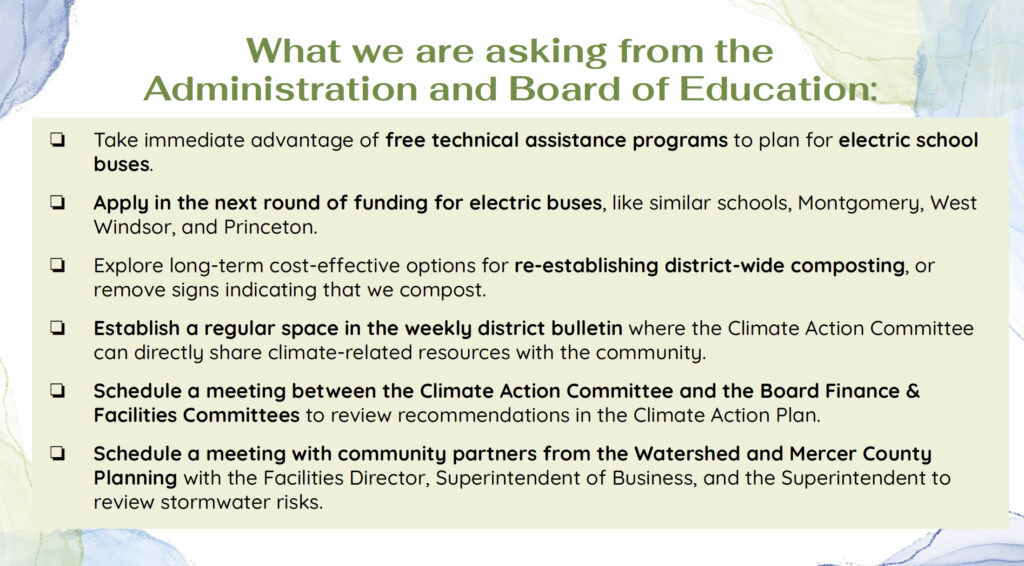
Superintendent Dr. Rosetta Treece praised the committee’s work and said the district intends to move forward on the recommendations.
“I’ve agreed to all these,” Treece said as she reviewed the committee’s proposed next steps.
Treece said district officials have already begun exploring options for restarting composting programs and plan to dedicate space in her superintendent newsletter to regularly update the community on climate-related initiatives.
“These are all items that are well achievable, and our students have worked really hard to make these things happen,” Treece said.
She credited students for driving the district’s climate efforts from the beginning.
“This is completely student-led,” Treece said. “They give me my marching orders and I march.”
Board President Anita Williams Galiano echoed that support, describing the students’ message as “clear and resounding” and praising their persistence in continuing to advocate for long-term climate goals.
“I hear you and I look forward to our continued work together to figure out how we get some of these big items figured out for our school district,” Williams Galiano said.
Hopewell Valley Board Adopts Civility Resolution, Hears Community Concerns on Programs and Cell Phones
The Hopewell Valley Regional Board of Education adopted a resolution supporting civil discourse during its June 15 meeting, joining a statewide initiative launched by the New Jersey School Boards Association as officials discussed the importance of respectful dialogue in public education.
The resolution is part of NJSBA’s “Civility Starts With Us” campaign, which encourages local boards of education to reaffirm commitments to respectful engagement, productive meetings and student-centered governance.
According to materials provided by NJSBA, the initiative was created in response to increasing polarization in public discourse and its impact on local communities and public institutions.
“Civility is not about avoiding disagreement; it’s about engaging in it respectfully, listening and creating space for thoughtful dialogue,” the association wrote in a letter encouraging districts to adopt the resolution.
Board members voted unanimously to support the measure.
Parents Voice Concerns About Gifted Education
During public comment, several parents raised concerns about gifted and talented programming, particularly at the elementary and middle school levels.
Parents questioned whether students identified for enrichment opportunities are receiving sufficient instructional time and expressed concern about potential reductions in services as enrollment increases.
Speakers urged district leaders to continue evaluating the program and ensure that advanced learners receive appropriate educational opportunities.
The district committed to doing a program review of the program offerings to see if there are ways to better integrate and evolve the programs into the school day.
Community Members Advocate for German Program
The board also heard from community members concerned about the planned elimination of German language instruction for rising sixth graders at Timberlane Middle School.
One parent described the program as a unique educational opportunity that has helped students build long-term relationships and cultural understanding.
The speaker urged district leaders to reconsider the decision and preserve language options for future students.
Treece said that there will continue to be German offered at the High School and the plan will be that German 1 will be offered then so when students reach ninth grade they can look at starting a new language.
Parent Supports Stronger Cell Phone Restrictions
The board also heard support for stronger restrictions on student cell phone use at the high school level.
A parent speaking during public comment cited concerns about distractions, social media and student well-being, and encouraged the district to consider policies similar to those being implemented elsewhere in New Jersey.
The comments come as school districts across the state continue to evaluate cell phone policies ahead of the 2026-27 school year now that bell to bell bans on phones have been authorized at the state level.
Hopewell Valley administrators had previously expanded restrictions and are working on a policy for the high school that will be in place in the fall.
Board Honors Retiring Business Administrator
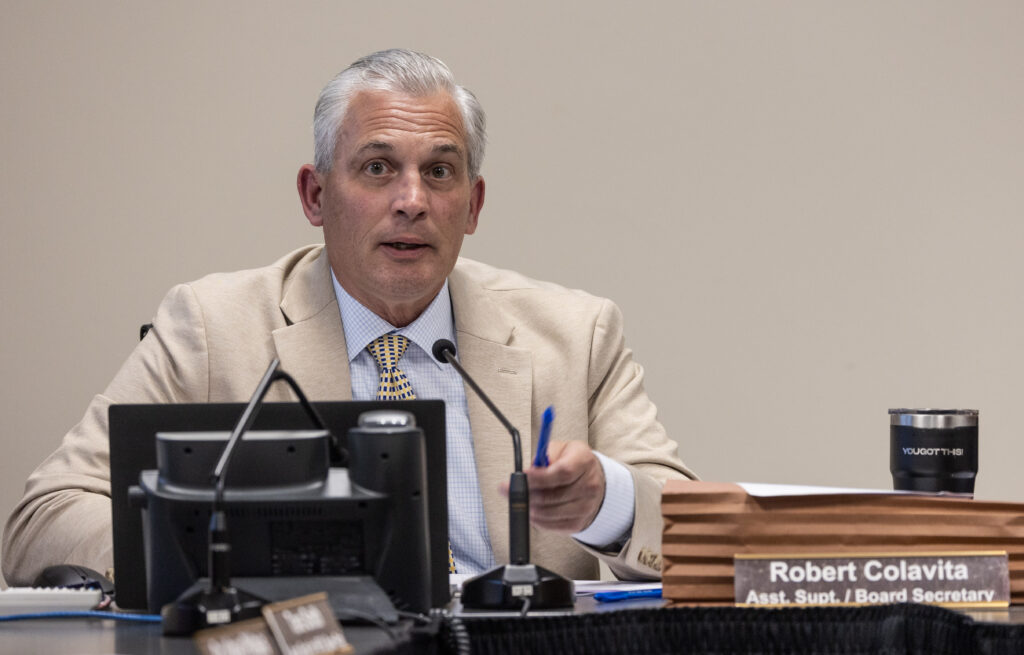
The board recognized retiring Business Administrator Robert Colavita for his decades of service to public education.
Colavita is concluding a career that included 24 years with Hopewell Valley Regional School District and more than three decades in school administration overall.
Board members thanked him for his leadership, financial stewardship, and commitment to the district during a period that included significant facility projects, budget challenges and changing educational needs.
Superintendent Dr. Rosetta Treece praised Colavita’s contributions and wished him well in retirement.