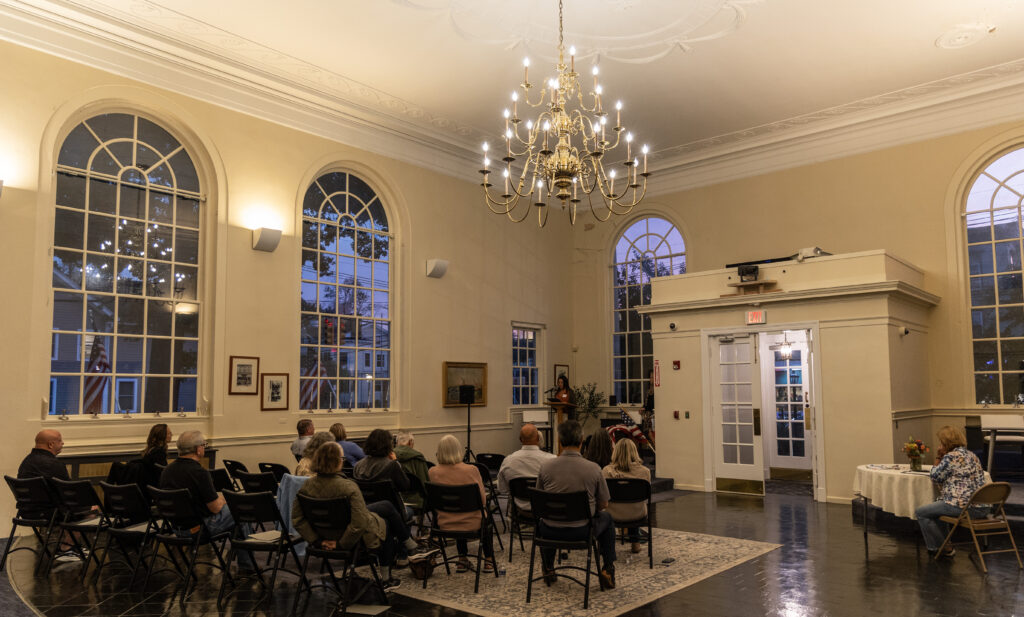

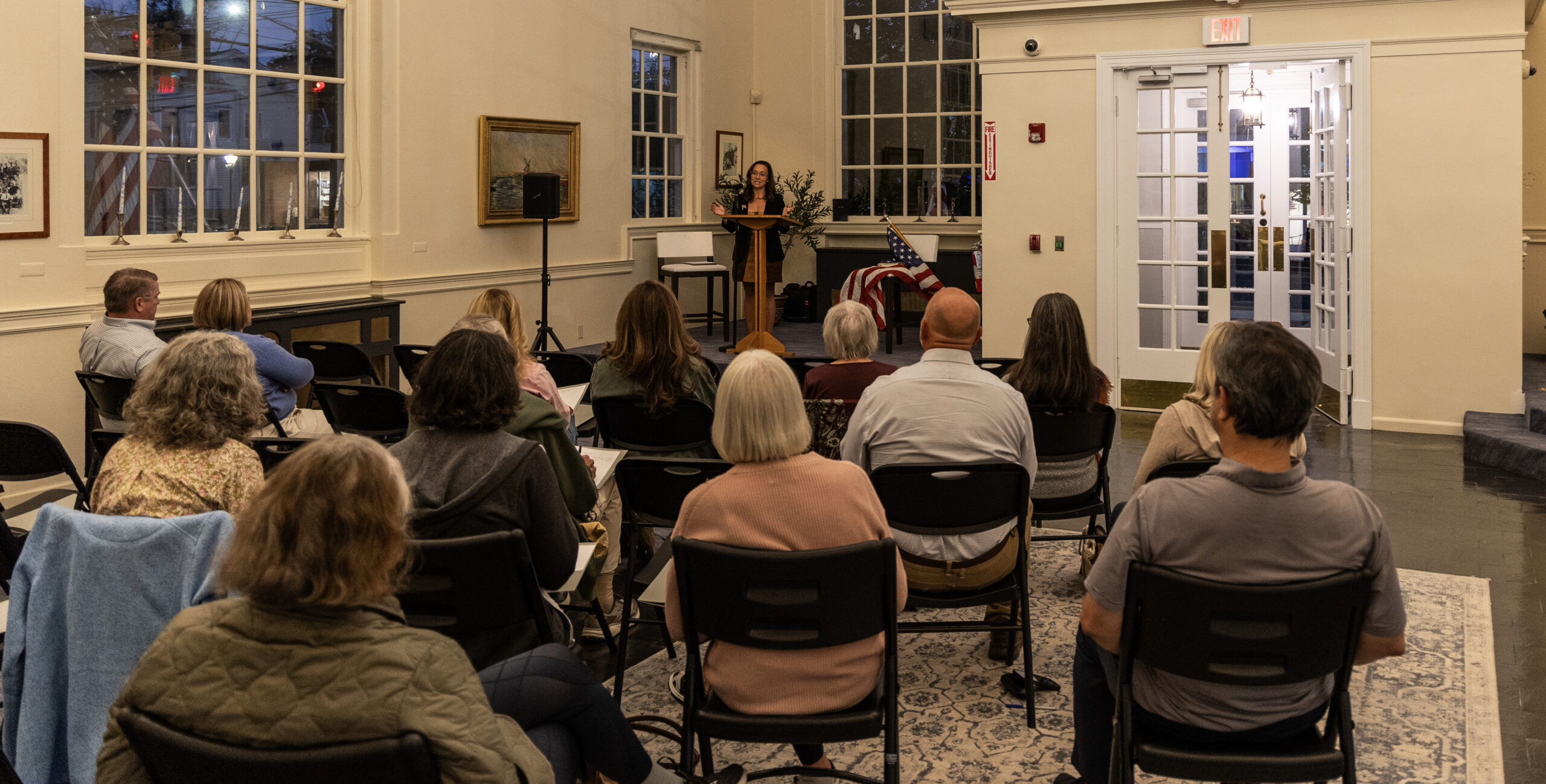
Inside a nearly century-old former bank building in downtown Pennington Thursday evening, political science professor Lindsey Cormack spent nearly an hour talking about how Americans learn to be citizens.
Then the questions started.
A small audience stayed for an extended discussion that moved from how young people talk about politics and the rise of mail-in voting to local civic participation, the possibility of allowing 16-year-olds to vote in school board elections and how schools can teach government in politically divided times.
The gathering was the second installment of the Hopewell Valley Republican Association’s Courageous Conversations Book Discussions series and featured Cormack, an associate professor of political science at Stevens Institute of Technology and author of How to Raise a Citizen (And Why It’s Up to You to Do It). The question-and-answer session was moderated by MercerMe Editor Seth Siditsky.
Organizers opened the evening by describing the series as an opportunity for people to engage across political differences through “curiosity, humility, and kindness.”
That idea carried into Cormack’s presentation.
She told the audience that Americans increasingly need to view people with different political views not as enemies but as people whose competing ideas are part of the democratic process.
“We have to see each other as worthy opponents,” Cormack said, describing democracy as a process in which opposing ideas can produce better outcomes.
Talking politics when everyone sees something different
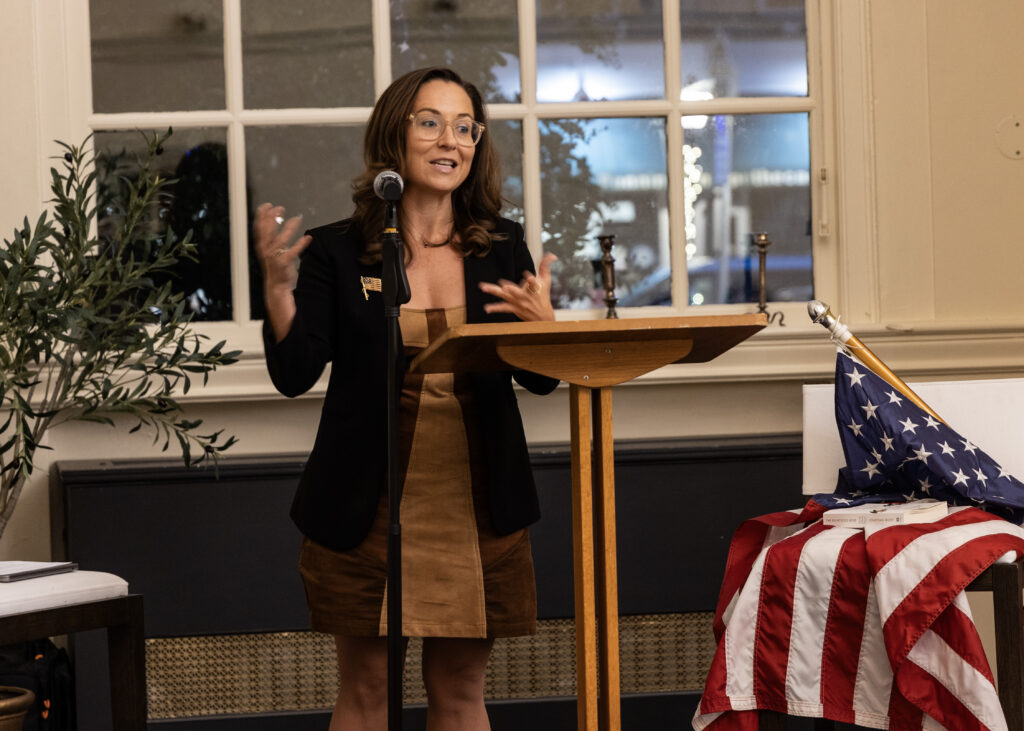
During the question-and-answer session, the conversation turned to whether younger Americans are becoming more comfortable discussing politics.
Cormack said she sees something different among her college students. Many are less worried about how a professor will react to their political views than about how their classmates will respond.
“I actually find more of their fear is about the social sanctioning of the others around them,” she said.
The problem is compounded, she said, by increasingly separate information environments.
During a presidential election, Cormack said, her class created two fake Instagram accounts, one following conservative accounts and terminology and another following liberal ones. Students spent several minutes each week comparing what appeared on the two feeds.
“In the entire sixteen weeks of the course, there was not one thing that appeared on both,” Cormack said. “They were all totally separate fire hoses of content.”
That can leave people without even a shared vocabulary for discussing political issues, she said.
Finding a way into civic life
Audience questions also pushed the discussion toward practical ways of getting younger people involved.
Asked how to move a young person from being a political spectator toward becoming a participant, Cormack suggested beginning not with politics itself but with whatever already interests them.
“Some children are interested in bike lanes, and some kids care about trains, and some kids care about clean water, and some kids want like more parks,” she said. “Whatever it is, wherever they have like a care or an interest, I would follow.”
Another question brought the discussion particularly close to home: whether allowing 16-year-olds to vote in school board elections could help establish the habits of civic participation.
Cormack said voting is “habit-forming and contagious” and that school board elections could give teenagers an opportunity to participate in decisions that directly affect them.
“They can say, ‘I have a vested interest in the outcome here. I care who sits at that table,’” she said.
Cormack also discussed voting itself as a learning opportunity for families. Bringing children into a polling place can demystify the process, she said, while filling out a mail-in ballot at home can create a different opportunity for families to slow down, examine the ballot and talk through the choices before them.
“Whatever it is that you choose to do your voting,” she said, “make sure you bring your child along for so that they can understand.”
From passengers to participants
Cormack closed her prepared remarks with a story from the research behind her book.
During a sabbatical, she took two camping chairs, a small table and a three-minute timer around New York City and invited strangers to sit down and talk with her about politics.
Again and again, she said, people described politics as something happening around them — as if they were passengers aboard a ship being tossed about by forces they couldn’t control.
Cormack came away thinking the metaphor was wrong.
“We’re actually not passengers on this ship,” she said. “We are the crew.”
If people don’t like where civic life is headed, she said, the answer is to work with others to move it somewhere else.
“The Constitution starts with ‘We the people,’” Cormack said. “It’s not ‘we the political parties’ or ‘we the president’ or ‘we the Congress.’ It is ‘we the people’ because it’s a recognition that government is ours.”