

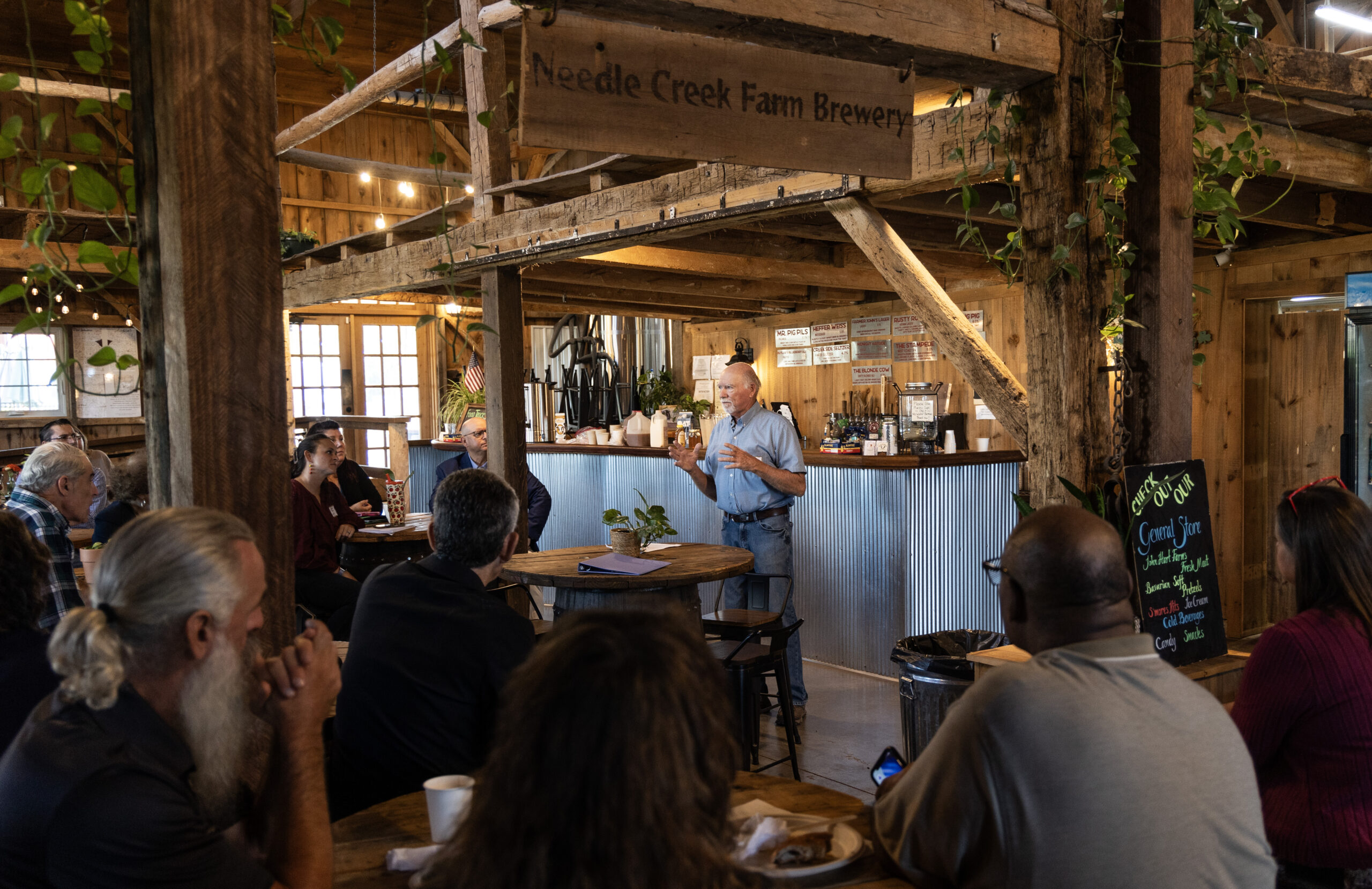
Farmers from across Mercer County sat down with state, county and local officials Monday morning at Needle Creek Farm Brewery to talk about the challenges they are facing — from damaging weather and deer to the rising costs and changing economics of keeping farms viable.
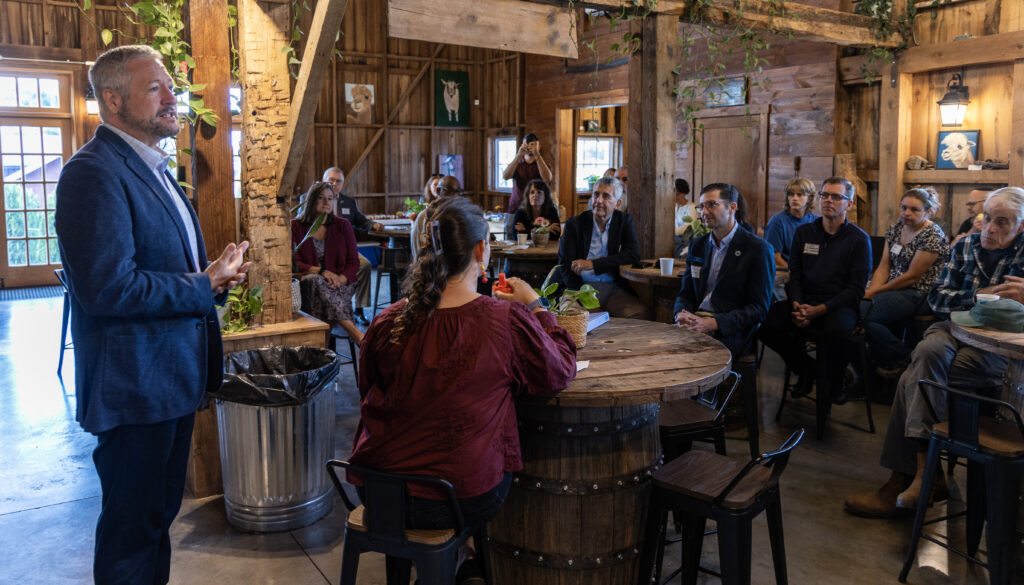
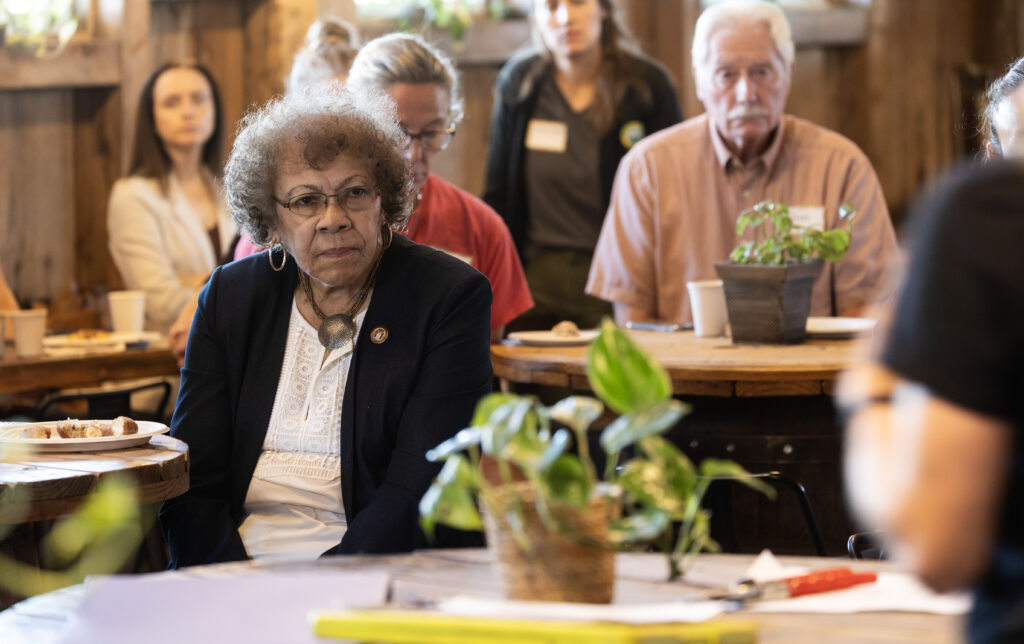
The Mercer County Board of Agriculture’s annual legislative listening session brought farmers face to face with officials including Mercer County Executive Dan Benson, state Sen. Shirley Turner and Assemblywoman Heather Simmons, along with county and municipal officials and representatives of agricultural agencies.
The morning was designed largely around listening, giving farmers an opportunity to describe what is happening in their fields and businesses and what government might be able to do to help.
“It’s a worthwhile annual opportunity that the farming community gets to sit down, share some coffee and breakfast with members of different parts of our government to really talk,” Mercer County Board of Agriculture President Justine Gray told MercerMe.
“It can be really impactful to have a chance to be heard by federal, state, county and local officials to talk about issues that matter to the people that put food on your table three times a day,” Gray said. “They come to listen and farmers come ready to hit on the issues that really matter in NJ and Mercer County Ag.”
A difficult growing season
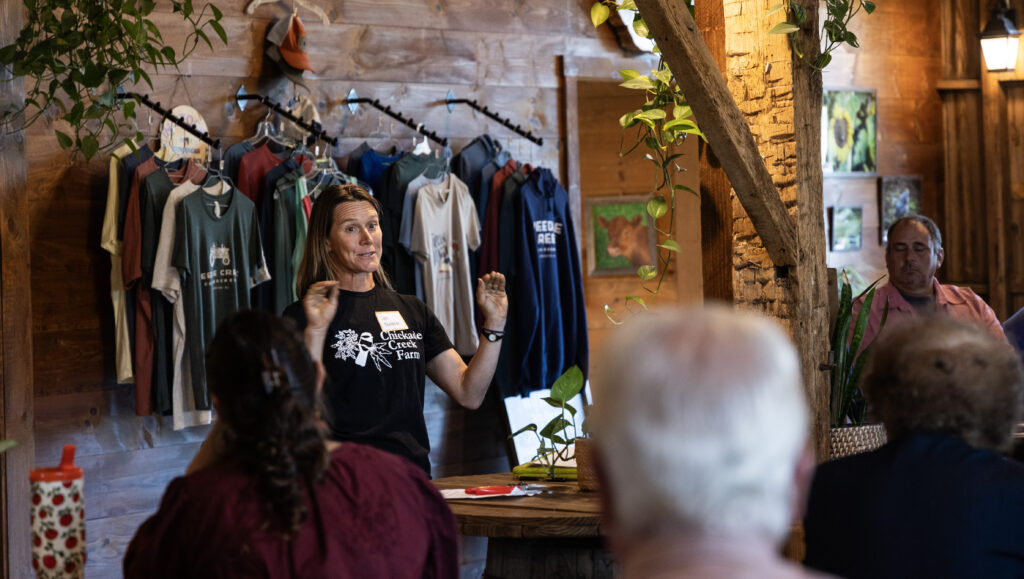
Jess Niederer of Chickadee Creek Farm in Hopewell, Twp. put numbers behind the impact of this year’s weather.
Niederer told the gathering that her 20-acre organic vegetable operation sells through a 1,000-member community-supported agriculture program and six farmers markets each week and employs 12 people full time and year-round.
The farm has annual sales of about $1.2 million, she said, but losses directly related to weather and climate conditions this year have amounted to 9.7% of sales.
“That’s some pretty serious numbers, and we’re not even a fruit farm,” Niederer said.
Chickadee Creek grows about 50 different crops, diversification that Niederer described as the farm’s primary form of crop insurance. But this season brought lightning and wind damage as well as saturated fields.
Some of those risks can be mitigated, she said, through investments in lightning protection, drainage and infrastructure that can help protect crops during extreme cold. Those improvements, however, can be expensive.
Niederer urged officials to view assistance for those investments as more than help for an individual business.
“If and when you see proposals to try to help farmers with climate mitigation, do not just simply think that’s just asking for her salary to get covered for the year,” she said. “It’s just asking to continue to be able to grow food for people in a safe way in our state.”
The impact of extreme weather was also raised by Terhune Orchards, where the Mount family has spent much of this season adjusting to the damage caused by the April freeze. The cold killed much of the farm’s fruit crop, including peaches, cherries and Asian pears, and badly damaged its apples. Terhune has continued operating by leaning on other crops and the diversified parts of its farm business.
Gray said the freeze was an important part of Monday’s conversation because the immediate attention surrounding the event has faded even as farmers continue to deal with its financial consequences.
“It was nice to actually talk to people who could make a difference on what kind of relief is being given to farmers in New Jersey,” Gray said.
Deer and keeping farms viable
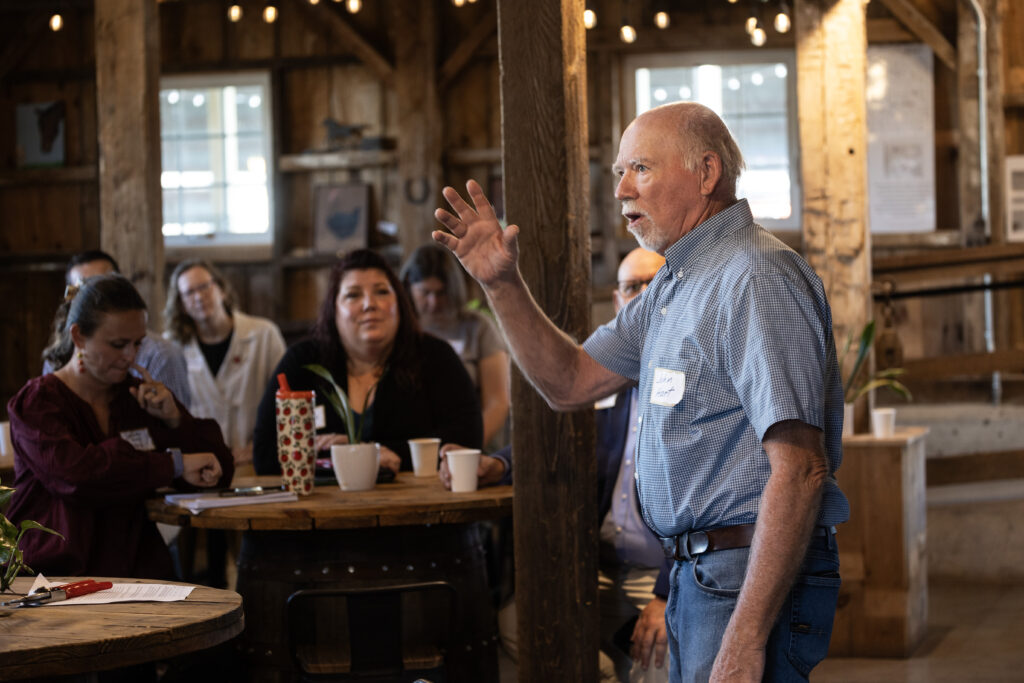
For John Hart, whose farm hosted the gathering, another pressing problem is one familiar to farmers throughout the region: deer.
Hart said farms increasingly need fencing to protect crops and called for additional funding that would allow deer harvested through population-control efforts to be processed and donated to food banks rather than discarded.
“We’d rather have them shoot them, bring them here, so we can feed these food banks,” Hart said.
Hart told MercerMe after the gathering that funding for processing is critical to making such a program work. Local butcher shops can process donated deer for distribution to food banks, he said, but without funding, someone has to absorb the cost.
Hart also spoke about the changing agricultural landscape around his farm. He recalled that he and two other farmers once farmed about 800 acres nearby, much of which has since been developed. Today, several farms remain clustered around Needle Creek, including Chickadee Creek Farm, Blue Moon Acres, and Fairgrown Farm.
Needle Creek Farm Brewery itself represents one way Hart has adapted to keep his property in agriculture. He said farming approximately 70 acres was no longer enough on its own, leading him to develop the brewery and agritourism operation. The farm grows about 80% of the barley used there, Hart said.
Hart also raised a longer-term concern: attracting another generation to farming. He described inviting children visiting his farm to help feed the cows and asking how many would like to become farmers. Plenty of hands go up, he said, but relatively few young people ultimately enter agriculture.
“You got to get more young people,” Hart said. “We won’t have any agriculture.”
Bringing the issues directly to government
Benson told the gathering that much of the work surrounding farmland preservation, open space and support for farms happens at the county level. He pointed to the county’s agricultural operations and partnership with Rutgers Cooperative Extension and said county representatives were there not only to listen but to determine where they could help.
The discussion also touched on urban agriculture and efforts to better connect agricultural production with urban communities and markets.
For Gray, the range of issues was precisely the point of the annual gathering.
She said farmers and elected officials often cross paths at other events, but the listening session gives them a chance to sit down in a more informal setting specifically to discuss agriculture. Holding it in September also means farmers arrive with the successes and problems of the current growing season fresh in their minds.
“It’s like the one time of year we really see these people in kind of a more casual setting where people are ready to listen and people have brought their ideas to the table,” Gray said.
“All these issues are top of mind.”